

How to implement the EYP at Claret: A Professional and Realistic Debate Experience
The aim of this proposal is to try to explain in a deep way how the EYP works and how we can implement it in our school. The EYP is not a usual debate league, as it’s very professional and perfectly simulates real-world parliamentary debates.
Firstly, the different committees have to identify the problems they are facing from the booklet they are given on the first day (everyday problems in the current world). Afterwards, they need to select which ones they want to emphasize, as there are lots of problems. Furthermore, they need to come up with some solutions and develop them. Another thing that goes along with this are the calling actors, the people that can bring these solutions to the real world (the ones that can make this possible). This is just the preparation; then you have to bring everything to the different committees in the general assembly with the jury and everyone participating.
The night before the debates, at around 12 p.m., all the committees will receive a booklet with all the solutions from all the teams. This is because the different committees will be able to prepare attack speeches for the other committees, but we will explain more later.
Each debate has a very solid structure, so they are pretty much the same. It starts with the presenting committee presenting their solutions. Then 2 committees will present their attack speeches (which may have positive or negative aspects but are meant to attack the presenting committee). Afterwards, the presenting committee will be able to respond to the attacks. The first part of the debate is done; now we move on to the second. It consists of three rounds, each identical, with a simple structure: four questions from the other committees and one response from the presenting committee. The last part consists of the conclusion of the presenting committee.
Everything is done from the seats they have assigned in the auditorium; the only thing that is done at the podium on the stage is the introduction, conclusion, and attack speeches. There is an added feature that is totally legal to use; it is called direct response. It is basically a direct input that you can make if it is directly related to what was just said.
To sum up, I believe we could do this in the auditorium with all the students together. This would be a very beneficial experience that would make them see how the political world works, and their debate skills would improve too.
Written by Victor Pottier
Through Emma’s Eyes: A First-Person Perspective and Opinion on the European Youth Parliament
The European Youth Parliament (EYP) is a prestigious event that takes place all over Spain, providing teenagers between the ages of 15 and 17 with an opportunity to engage in critical debates and discussions on various topics. The three-day event culminates in an assembly held on the final day, which brings together participants from across the country to present their positions and engage in productive discourse.
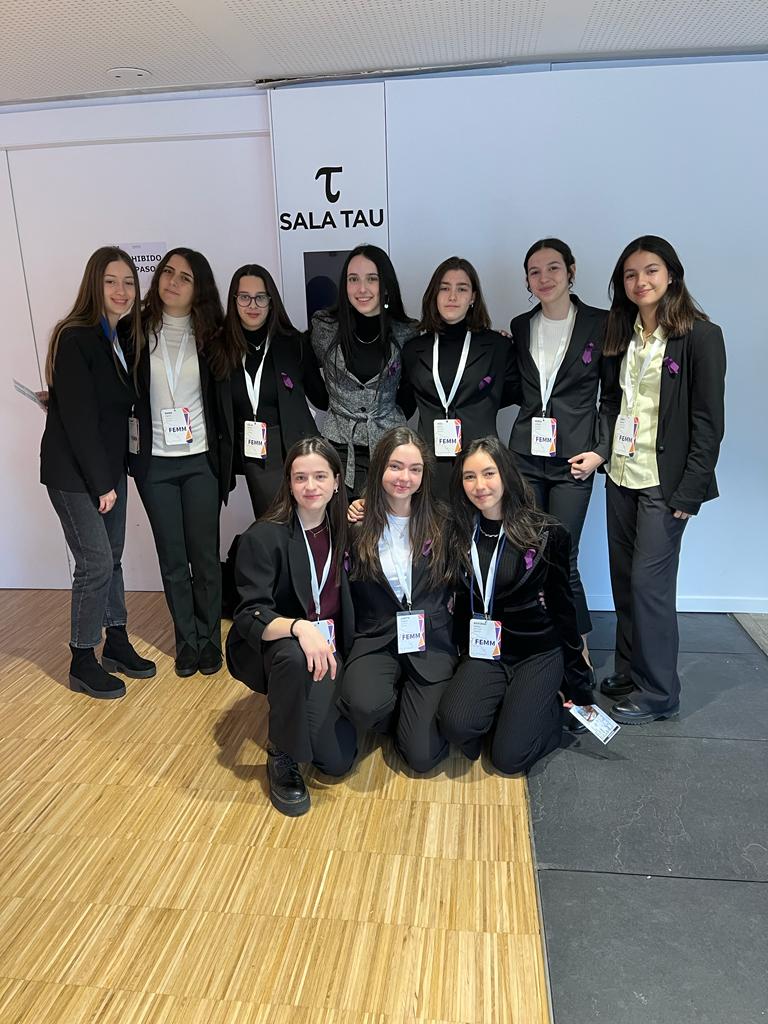
The recent Barcelona EYP, held at the Cosmocaixa and Pompeu Fabra University over the last weekend of February, was a resounding success. Although apprehensive at first, I was quickly put at ease by the warm and welcoming organizers and participants. After being divided into various committees, I was fortunate to join the FEMM committee, where I had the chance to explore the topic of spiking and its consequences in great detail.
One of the most striking aspects of the EYP was the opportunity it afforded us to improve our English fluency. The caliber of the delegates was impressive, and I relished the opportunity to engage in discourse with peers who shared my passion for public speaking. The experience was invaluable in building my confidence and honing my presentation skills, which will undoubtedly serve me well in the future.
Despite the overwhelmingly positive experience, there were a few areas for critique. For instance, I was disappointed with the quality and quantity of food provided, which I felt was rather lackluster. Additionally, I observed that some schools were better prepared than others, which led to a disparity in knowledge of the assembly’s structure and processes.
In conclusion, I highly recommend the EYP to teenagers who are passionate about public speaking and eager to improve their English skills. However, it is important to note that individuals without at least a B2 level of English proficiency may find it challenging to participate fully. Overall, the EYP is a fantastic opportunity for young people to engage in productive dialogue and hone their communication and presentation skills.
Written by Emma Fonts
 Revista Claret Barcelona